
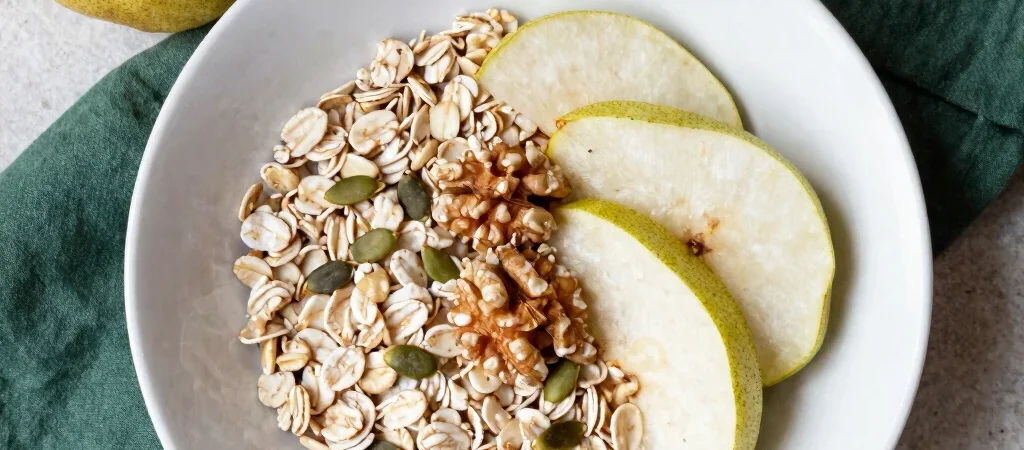
If your usual lunch is a sandwich and a piece of fruit, adding fiber does not have to mean replacing the whole meal. A handful of chickpeas in a salad or whole-grain bread instead of white bread can be a more workable first step. Fiber-rich foods are worth making room for, but the best approach is usually the one that fits your appetite, budget, and kitchen.
Build from foods you already eat
Oats at breakfast, lentils in soup, beans in tacos, and vegetables alongside dinner are familiar ways to bring more fiber to the table. Whole fruit, such as a pear or an orange, also offers fiber along with its natural texture and flavor. Think about adding one of these foods to a meal you already enjoy rather than planning an entirely new menu.
Different fiber-containing foods have different properties, and a varied eating pattern can include fruits, vegetables, legumes, nuts, seeds, and whole grains. That does not make any single ingredient a cure or guarantee against disease. It is a practical way to make everyday meals more nourishing and satisfying.
Increase it at a comfortable pace
A sudden jump from very little fiber to several servings of beans and bran can feel uncomfortable for some people. Add fiber-rich foods gradually and drink fluids regularly, adjusting to what feels good for you. If a particular food consistently causes symptoms, it is reasonable to choose another source rather than force it.
A simple start might be oatmeal a few mornings this week, or rinsed canned beans folded into a soup or grain bowl. Keep the change small enough that it survives a busy Tuesday. If you have a digestive condition or have been given individualized dietary advice, check with your health professional before making a substantial change.
Products not fetched from DB and/or API. Please check debug logs.